
Home Security for Seniors: The No-Nonsense Setup That Actually Works
Skip the overpriced monitoring contracts. Here is a straightforward, effective home security setup built around smart cameras, solid locks, and common sense — tested by retirees, for retirees.
Whether you are a lifelong gun owner or someone newly considering your right to carry, navigating the concealed carry permit process can feel overwhelming. Laws vary dramatically from state to state, reciprocity agreements change regularly, and the application process itself differs in every jurisdiction.
This guide cuts through the confusion and gives you the practical, state-by-state information you need to carry legally and confidently across America.
Understanding the Basics
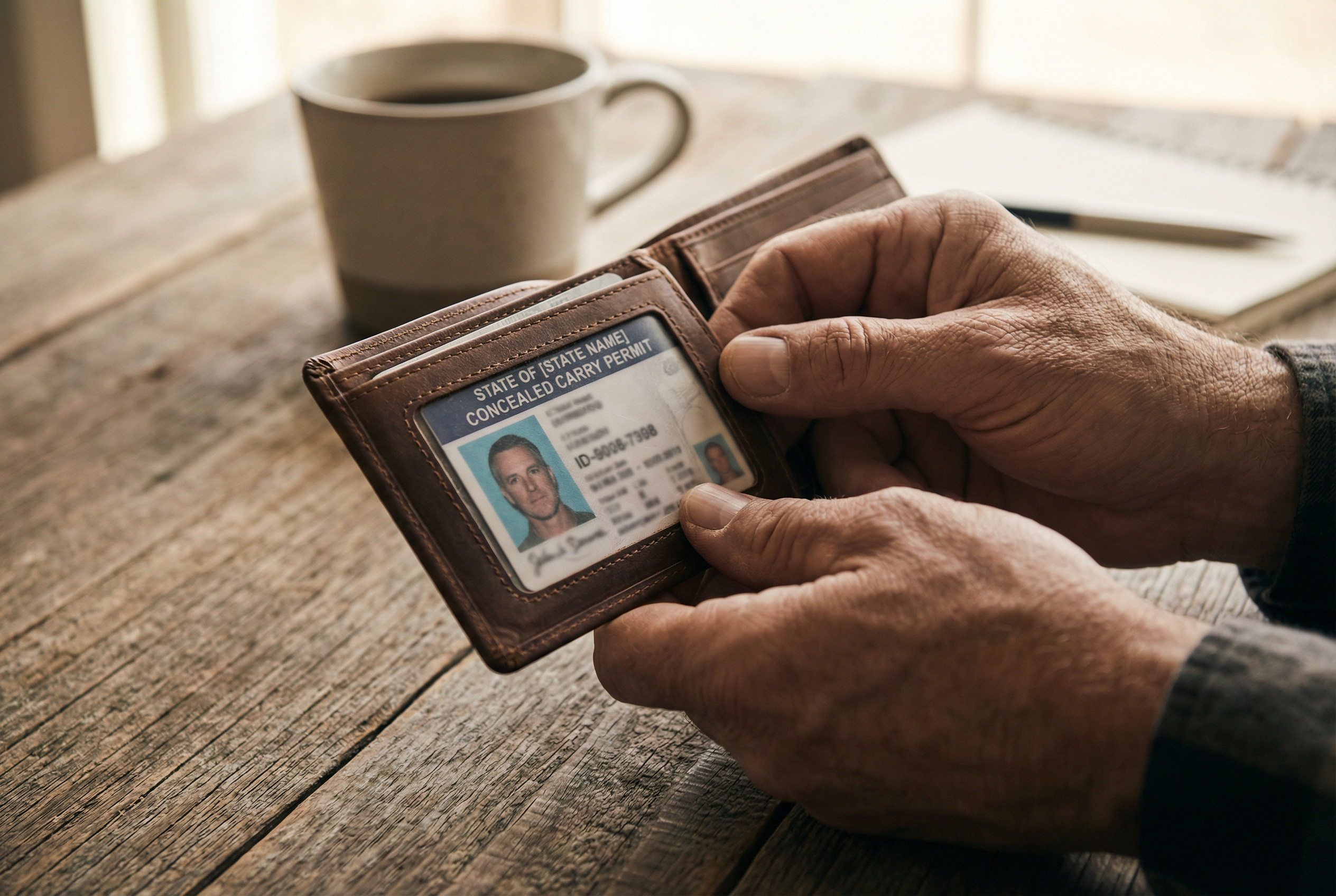
A concealed carry permit — also called a CCW (Carry a Concealed Weapon) permit or CHL (Concealed Handgun License) depending on your state — is the legal authorization to carry a concealed firearm in public. As of 2026, 27 states have enacted "constitutional carry" laws, meaning no permit is required for law-abiding citizens. However, even in those states, obtaining a permit is often worthwhile for reciprocity purposes when traveling.
The Application Process
Most states follow a similar general process, though the specifics vary significantly. You will typically need to complete a firearms safety course, submit to a background check, provide fingerprints, and pay an application fee. Processing times range from a few days in some states to several months in others.
The most important first step is visiting your county sheriff's office website or your state's official firearms licensing portal to get the exact requirements for your jurisdiction. Do not rely on third-party summaries for the legal specifics — always verify with the official source.
Reciprocity: Carrying in Other States
One of the most critical things to understand before crossing state lines with a concealed firearm is reciprocity. Some states honor permits from all other states. Others honor only a specific list of states. And some states — like California, New York, and Illinois — do not honor any out-of-state permits at all.
The USCCA and the NRA both maintain regularly updated reciprocity maps that are worth bookmarking. Always check before you travel.
Key Tips for New Permit Holders
Once you have your permit, the legal responsibility does not end there. You are now responsible for knowing the laws of every jurisdiction you enter. This includes where you can and cannot carry — schools, government buildings, posted private property, and bars have specific rules in most states.
Invest in quality training beyond the minimum required for your permit. A defensive shooting course from a reputable instructor is one of the best investments a new carry permit holder can make.